
Beyond the Holiday
The word vacation derives from the Latin vacuum: an empty space, an interval between two moments. Not necessarily an absence of activity, but a time to inhabit through meaningful experiences. The Romans distinguished between these two dimensions through the concepts of otium and negotium. It is what Domenico De Masi describes as the “taste of a break” in The Creative Leisure (1995): a time when well-being, culture, social interaction and discovery become essential to quality of life.
This is the context in which the leisure meta-sector emerges, driven by the growth of the so-called quaternary sector and its focus on services, experiences and the value of free time. Food, wellness, culture, mobility, entertainment and hospitality form part of a single ecosystem, responding to an increasingly widespread need: to make time away more meaningful.
Leisure and longevity
As life expectancy continues to increase, this transformation becomes even more significant. Living longer is no longer enough; the challenge is to live better. The concept of longevity expands the very meaning of leisure, extending it beyond holidays to encompass every stage of life.
Wellness centres and preventive healthcare facilities — such as Lucia Magnani Health Clinic — together with services and environments designed for an ageing yet increasingly active population, demonstrate how leisure is becoming a space for care, personal growth and quality of life. For brands, this means designing experiences that respond to new expectations while building lasting relationships with increasingly informed and conscious people.
Leisure as a Brand Identity Strategy
Leisure provides a particularly fertile ground for brand identity because a brand is more than a visual mark or a coordinated system of touchpoints. It is an ecosystem of values that takes shape through every interaction across space and time.
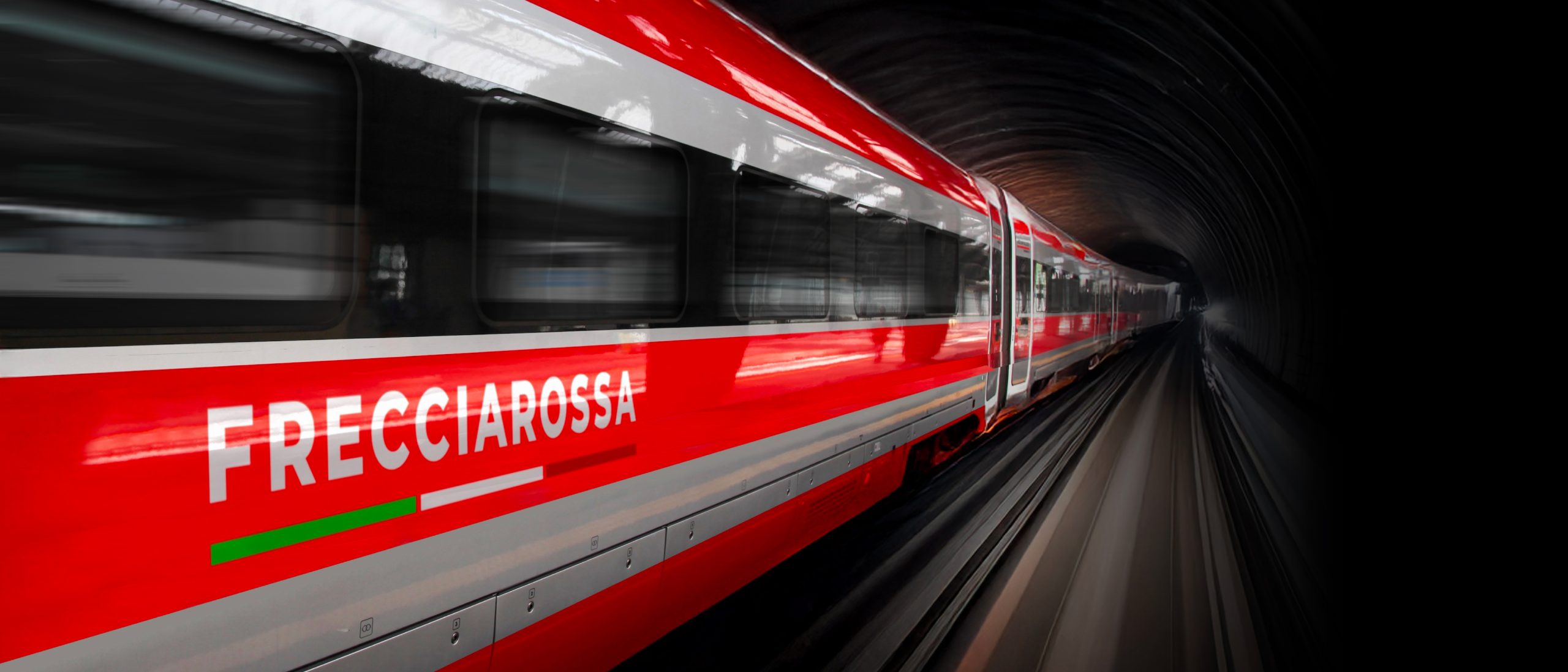
The relationship with a brand unfolds continuously across physical and digital environments. As with Frecciarossa, it begins with searching for and purchasing a ticket online, continues throughout the journey in every detail—from the onboard environment to something as small as a refreshing towel—and extends beyond arrival at the destination. Environments, wayfinding, spatial design, materials, services and digital platforms all contribute to building a coherent narrative. Recognition is not created by the repetition of a visual identity, but by the ability to interpret every context through the experience of the people who engage with it.
This perspective goes beyond the conventional notion of place identity. From a destination’s cultural offering to hospitality, from food to mobility and even healthcare, every element contributes to shaping the perception of a place and its identity. Leisure thus becomes a lens through which to understand complex ecosystems, where every experience strengthens—or weakens—the perceived value of both a place and its brands.
From Leisure to Lifestyle
The evolution of leisure ultimately leads to a broader understanding of lifestyle. At a time when ideological affiliations play a diminishing role, it is everyday behaviours that increasingly define individual identities. People choose brands, places and experiences that reflect the way they aspire to live.
As a result, brand identity no longer serves simply to differentiate an offering. It creates desirable worlds that shape behaviours and foster a sense of belonging. It is within this still largely unexplored space that we see one of the most significant opportunities for the future of contemporary branding.