From Branding to UX: design in the financial sector

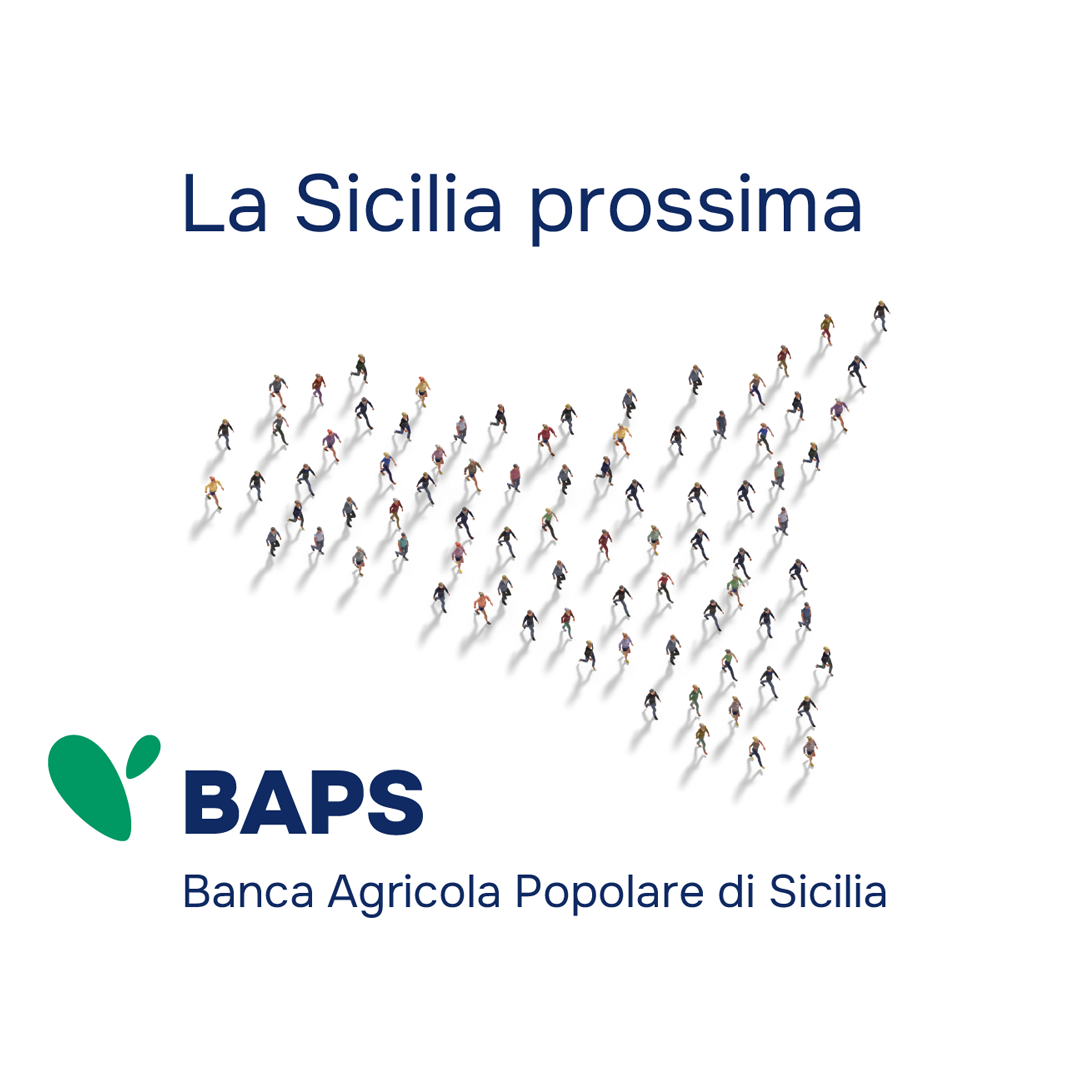
Design and finance are deeply interconnected: every project not only creates value but also strengthens the company’s overall strategy. Mario Suglia explores how, with increasing digitalization, it is possible to communicate the identity of banks and insurance companies in a compelling and effective way—through tools like UX design and storytelling. The goal: to build a customer relationship that is not only more empathetic, but above all, authentic. What is the relationship between finance and design? And how does Inarea approach projects in the finance and banking sector? Today, the relationship between finance and design has become increasingly close and strategic. These are no longer two entirely separate domains: every design project creates economic value and therefore generates finance. In the past, they were considered distinct worlds—finance was primarily focused on money management and investments, while design was concerned with aesthetics, functionality, and communication guidelines for corporate and product branding.However, if we look closely at the post-war period, we can begin to see points of connection. Think of how impactful packaging, aesthetics, and advertising were for sales from the 1950s to the 1970s, during the economic boom. With the rise of consumerism, it became clear that a well-designed, more attractive, and functional product sold better. Companies were therefore happy to fund design programs if it meant increasing profits. Today, companies are well aware that design generates value. Consider the many so-called “design-driven” companies like Apple, Tesla, Dyson, and even Airbnb. Design is a foundational component of capital and plays a decisive role in equity value. There are venture capital funds specializing in corporate investments that prioritize design and creativity—something that would have been unthinkable before the 1980s. In this context, Inarea stands out for its commitment to shaping the meanings at the core of a company through a form of design that generates both beauty and value—bringing together financial, strategic, and aesthetic logic into a single design concept: integrated design. This approach expresses meaning and creates value through visual, auditory, olfactory, and tactile forms—across physical spaces, digital environments, and even behavioral patterns. Is it possible to identify a general methodology in the projects Inarea has carried out in the financial sector? Inarea has long adopted a methodology that requires the project team, at every stage, to reinterpret the “observed object” (whether a company, product, service, etc.) through a strategy that repositions it within its sector while also taking into account the various brand languages. For example, if we are asked to create a sound logo, we don’t necessarily alter the brand or its communication codes. Instead, we decode them to uncover their underlying meanings and design sound elements that integrate naturally into the identity system. This is a process deeply rooted in what we define as Integrated Design—an approach that is consistently applied, yet always tailored to the unique characteristics of each client or context. The financial institutions we’ve worked with in recent years—including Gruppo BCC Iccrea, Banca Ifis, BAPS, and Sara Assicurazioni—each have their own distinct characteristics, histories, and relationships. For BCC, the local territory is the driving force behind its actions and a key element in building its brand. The same applies to BAPS, Banca Agricola Popolare di Sicilia, where the territory holds central importance. This is reflected in their positioning statement: “Siamo la Sicilia prossima” (“We are the Sicily that’s close”), highlighting the bank’s mission to stay close to businesses and people, helping them shape their future.Identifying the deepest meaning, defining a vision of the future, and giving it form—this is the essence of our work in every project, including in the world of finance. Inarea always starts from the same principle: understanding the deepest and most distinctive meanings of each organization and translating them into coherent and effective design. Projects are entrusted to in-house teams with specialized expertise in the financial sector, supported by professionals with broader, cross-disciplinary skills. This ensures a focused representation that aligns with the brand’s strategic objectives. What changes will ongoing digital implementation bring to the user experience in this sector? In recent years, there’s hardly a bank or financial institution that hasn’t come to understand that design—especially UX/UI, branding, service design, and customer experience—is not just about aesthetics, but a strategic and tangible asset capable of increasing financial value. The digitalization of financial services is radically transforming the user experience in the finance world. In an increasingly connected and disintermediated environment, it’s essential to design engaging digital experiences, with growing emphasis on emotional interaction—achieved through interfaces and user journeys that are beautiful, simple, and functional—and through storytelling.Banks should integrate narrative and visual tools, such as authentic stories, light-hearted language, irony, and elegance, to compensate for the reduced human contact and strengthen their relationship with customers. While regulatory and security aspects remain essential, the future of identity design in banking and finance must increasingly focus on creating emotional experiences—where design not only communicates but also engages, builds loyalty, and inspires. It must go beyond numbers and percentages to uncover and express human connection.This applies not only to digital spaces but also to physical ones, which must be reimagined as experiential environments that foster authentic relationships: transforming bank branches into empathetic spaces that encourage dialogue. Today, banks too should embrace a design-driven approach—one that creates experiences capable of attracting, engaging, and building customer loyalty through intuitive and meaningful interaction, grounded in authentic and deep-rooted values. The focus is no longer just on the service itself, but on the overall design of the relationship: what the customer feels and experiences each time they interact with the bank.Looking ahead, frontier technologies—most notably artificial intelligence and quantum computing—will reshape the relationship between banks, financial institutions, and their customers. Once again, design will play a central role in representing these new “environments” and in shaping a new concept of connection.But that’s a topic we’ll explore in a future interview.

BAPS, the bank that speaks the language of its roots

A clear trend is emerging in banking communication: a move toward simplification and the adoption of a tone that is both authoritative and relational. Financial institutions are working to build trust through a sober, direct tone of voice, paired with a clean, essential visual style. The goal is twofold: to convey institutional solidity and to strengthen brand identity in an increasingly digital market.“In this context,” says Emanuela Camera Roda, Project Director at Inarea, who led the brand identity project for BAPS (Banca Agricola Popolare di Sicilia), “we’re seeing a progressive shift in communication toward the master brand rather than promoting individual products. This approach supports consistency, clarity, and recognizability across all touchpoints—both physical and digital.”This was precisely the case with BAPS, whose brand identity project was driven by a deep need: to redefine the identity of a historic bank without betraying its territorial roots. BAPS is, in fact, the only major financial institution operating across the entire region that is authentically Sicilian. It is a cooperative joint-stock bank, and its shareholders—often employees themselves—live and work on the island. The new narrative set out from this uniqueness, drawing on the historical roots of the cooperative movements which, between the 19th century and the early decades of the 20th, gave rise to organized forms aimed at restoring dignity to disadvantaged segments of the population—those traditionally excluded from access to credit. The symbols of those movements were often linked to the agricultural world: the wheat ear, the rose, the reaper, the bee, and so on.In this context, and to underscore its distinctly Sicilian character, the new logo adopts a stylized prickly pear paddle—a plant found throughout the Mediterranean, but deeply rooted in the island’s landscape. This choice is meant to evoke, in a simple, iconic, and subtly ironic way, the ability to withstand extreme conditions while continuing to grow and thrive. At the same time, it visually expresses the strong bond that connects BAPS to its territory, moving beyond the ‘traditional’ and typically conservative imagery of the banking sector. The color green, now a key element of the logo, directly recalls the meaning of the word “agricola” in the bank’s name and implicitly conveys a message of sustainability. At the same time, BAPS’s historic blue is retained in the typography to preserve its institutional tone and maintain continuity with the past. The result is a color identity that balances nature and authority, tradition and innovation. A consistent system from physical to digital The project involved a systemic reorganization of the product brands, eliminating unnecessary logos and symbols and bringing everything back under the visual umbrella of the BAPS master brand. This “brand concentration” extended to every aspect of communication—from physical signage, sensitively adapted to specific local contexts, to digital platforms. Formal consistency across all channels became essential to strengthen the sense of belonging to the BAPS universe, making every touchpoint a recognizable and reassuring element. Territorial and local presence Even in the digital age, BAPS has chosen not to reduce its physical presence. On the contrary, it has expanded by acquiring new branches across Sicily—reaffirming that, especially for a cooperative and local bank, human connection remains essential. Branches serve as trusted touchpoints, particularly in small towns, helping to preserve strong ties with local communities. The result is a new identity that is strong, cohesive, and contemporary, yet deeply rooted in the bank’s history and values.

The connection between Venice and the Biennale

“There is a symbiotic relationship between the Venice Biennale and the city itself,” explains Antonio Romano on the eve of the 19th International Architecture Exhibition, titled “Foreigners Everywhere”.In 2001, Inarea designed the brand identity for the institution—an identity that is still in use today. Inspired by the iconic column in Piazza San Marco, the logo transforms the column’s shaft into a bold red field, a color deeply rooted in the culture and history of the Serenissima. This red frame highlights the name in white, while the stylized lion reinterprets the original bronze winged sculpture—once a chimera, later given wings.The logo features a strong vertical layout, balanced by a red square next to the column. This square serves to frame and emphasize the content it represents: a system of cultural and artistic events—Art, Architecture, Cinema, Dance, Music, Theatre, and the Historical Archive. This broad scope makes the Biennale a global point of reference and a powerful reason to return to Venice throughout the year. Why has this brand identity lasted so long? “Because it’s simple. It acts like a frame that highlights the content and the cultural structure of the institution. It becomes a system of symbols—a coherent and recognizable design that extends across all the various events and exhibitions. It serves as a kind of umbrella, unifying not only the cultural program, the institutional exhibition, and the pavilions of the participating nations, but also the signage and public communication throughout the city. Credit goes to the Institution for having implemented this system effectively and without disrupting the urban fabric.If the brand identity has helped make the Biennale recognizable, the Institution has made Venice more attractive by ensuring quality, enriching the visitor experience, and offering a new relationship with the city itself—transforming it into a destination not only for tourism, but also for cultural events. There exists a bond between the Biennale and the city, in which one is part of the other. And the Biennale becomes an all-encompassing entity: although there are many biennials around the world, the term immediately brings to mind the one in Venice.” What are the foundations of place marketing through cultural initiatives? “At the core lies the recognition of a system of values and symbols embedded in the territory. Place marketing begins with a process of simplification: the more the result is a synthesis of elements that can be linked—even implicitly—to a specific place, the more effective it becomes. Over the decades, we have developed various city branding projects: from Roma Capitale, where the famous acronym SPQR and the red and yellow colors (a transposition of imperial gold) have become so deeply rooted in the collective imagination that they serve as its emblem—see also the later brand identity project for Sapienza, University of Rome, which replaced the institution’s traditional blue with red—to the city of Milan [see also “Milan, City of the Spotlight”], where the rigor of the cross from the heraldic symbol becomes an organizing element capable of coordinating communication.” “Also worth mentioning are the cases of New Administrative Cairo Capital – City of Arts and Culture, and Pompeii.”. Although the latter is no longer a living city, the project of brand identity and the signage & wayfinding project for the archaeological site includes elements that resemble the organization and information accessibility of a ‘living’ urban environment. Faced with the need for simplified mapping, international usability, visual clarity, and durability of signage elements, the project follows the same principles of attractiveness, user experience, and ease of use that underpin urban place marketing.Similarly, for the new City of Arts and Culture in Cairo, we created a brand that combines international references to the pyramids with the wings of Saladin’s eagle, a national symbol of Egypt. We then developed a complex wayfinding system with pedestrian and vehicular routes that extend from the external world into the interior spaces, unified through a common signage language.It is a newly founded city, intended to host over six million inhabitants, in which I would hope to see a symbiotic relationship with the urban fabric—similar to the case of the Venice Biennale.

Milan: A City in the Spotlight

Milan Design Week is a showcase of potential and leadership recognized worldwide. It is rooted in a unique vision of design—specifically furniture design—that has developed historically within the very fabric of the city. Since 1961, this has been represented by the Salone del Mobile, the international furniture fair, and since 1990, by the FuoriSalone, a city-wide network of events initiated by Interni magazine. “The real question today,” comments Antonio Romano, “especially in an edition where the industry must also grapple with tariffs imposed by Trump, is how to strengthen the identity of the Salone del Mobile and define the role that Design Week is meant to play. Looking ahead, we cannot limit everything to furniture design (and its closest derivatives), particularly at a time when the word design is one of the most widely used adjectives in every vocabulary… even the philosopher Luciano Floridi defines his field as conceptual design! What truly concerns me is when success turns into self-celebration. That’s why Design Week must open up to the many dimensions of the discipline, exploring their interactions and building on Milan’s long-standing ability to attract creativity.” How Can Milan and Design Week Stay Attractive? “We need to rethink FuoriSalone without weakening Salone del Mobile. It’s essential to promote a city-wide program of events that go beyond what happens at the fair and the furniture sector—preserving the quality of Milan’s genius loci while embracing international experiences. Milan must remain in the spotlight by enhancing its appeal across different creative and industrial fields.However, if the event becomes too focused on spectacle or turns into mere self-congratulation, its future is uncertain. The key shouldn’t be the obsession with the present moment or the relentless pursuit of the ‘new & more new’ driven by likes and instant metrics.” What does Milan represent for Inarea? “We opened our Milan offices in 1988: Enichem had become an important client, and we needed to ensure a near-daily presence. Shortly after, Snam and Union Carbide joined, and with the latter, we began a collaboration at a European level. Because Milan at that time was also this: a design capital where you could meet international players. Our first foreign clients were gained precisely because of our presence here.In 1999, we won the competition to redesign the city crest and reorganize the identity system for the Municipality of Milan. This project allowed us to capture the essence of the city at a critical moment in its history, highlighting the distinctive Milanese combination of a deep attachment to tradition and a passion for innovation. The new design of the crest quickly replaced all previous versions, but the core of the project was the intention to turn the word ‘Milan’ itself into a brand. After all, many businesses (starting with Prada) had already associated their brands with their Milan identity, clearly proving that the city itself was (and still is) an added value. We designed a new typeface – aptly named Milano City – and separated the word from the phrase ‘Comune di Milano.’ The project was halted when the Albertini administration ended; though it still exists, it has since been modified.During these years of profound urban transformation, we also completed significant branding projects for real estate developments that reshaped the city’s skyline: Milano Santa Giulia, followed a few years later by Milano Porta Nuova, and later Pirelli RE (now Prelios). Staying within the realm of Milan-based institutions, it’s worth noting our rebranding work for Borsa Italiana and Edison. Additionally, in the energy sector, we also created the name and brand for the new Lombard multiutility, A2A.” Within the same broader field, though in more recent years, we’ve seen the rebranding of Snam and Italgas, and—just to name a few from memory—the brand identities of the Italian Infrastructure Fund F2i, Fondazione Cariplo, Fondazione Fiera Milano, the Milan Conservatory, Casa Milan, as well as many other projects that may have originated in Milan but were destined for broader horizons, such as the brand identity for the Venice Biennale, which certainly deserves to be remembered.There are also long-term projects that directly impact the daily lives of Milan’s citizens—like the rationalization of ATM’s wayfinding system, which included a redesign of signage (the pictogram system) and the creation of a dedicated display typeface, Metro Type.

Enrico Giaretta. What is Sound Design?

“In a world saturated with images, sound is one of the most powerful attention triggers—even with eyes closed,” begins Enrico Giaretta, musician, composer (or rather, “cantaviatore”) and Sonic Brand Director at Inarea. After various experiences with overseas agencies, Giaretta brings to Inarea a unique approach to sound design, centered around a core concept: a ‘pure sound source’ as the foundation for multiple outputs. The goal is to provide the brand with a communication tool that seamlessly integrates into its identity world, much like a symphony. In general, creating a sound is not complex; what is challenging is crafting one that can integrate across all levels and forms of corporate communication. It’s similar to the red used by Valentino Garavani, which, regardless of the garment it’s applied to, is always associated with the designer. How is a brand’s sonic identity built? “Once we understand the content, values, and meanings associated with a brand, as well as its existing sonic elements and characteristic phonemes,” Giaretta continues, “we then identify the physical and digital touchpoints where the brand can be perceived. For example, sounds below 80 Hz are not audible on all mobile devices, while in environments like a stadium, frequencies can drop well below 80 Hz. Next, we define the brand’s sonic DNA: that unique and recognizable source that allows the brand to be instantly associated with its sound. For example, the sound essence of Banca Ifis is characterized by a “glissando” that recalls its payoff “the value of growing together.” For Bauli, we selected the A3 note (at 440 Hz), the tuning reference for nearly all instruments, which we associated with the animation of the letter “i” at the end of the sound logo.” The sound logo is usually less than two seconds long. The shorter and more essential it is, the more effective and memorable it becomes, and consequently, the more enduring over time. Towards a Sonic Future: Inarea’s Musical Alphabet If words are increasingly intertwined with sound, and sound itself is deeply connected to perception—since the human brain reacts more quickly to auditory stimuli than any other, interpreting a sound in just 0.146 seconds—then the next step could be enabling a brand’s communication through music alone. With this goal in mind, at Inarea, we are developing the concept of a “sound alphabet,” which assigns a musical note to each letter, creating a universal language. This is a pervasive and engaging tool that, starting from a simple identifying sound cell, can transform into small melodies and even into complex brand themes. A prime example of this is Beethoven’s Symphony No. 5, which emerges from the evolution of a simple rhythmic cell composed of just four notes.

A 100-year-old encyclopedia in the digital age.

“A century ago,” begins Antonio Romano, “Giovanni Treccani and Giovanni Gentile brought together the brightest minds of the time to create a ‘national’ identity, expressed through the unity of Italian cultural heritage.” The first edition of the Treccani Encyclopedia was published in 1929 and completed in 1937: 35 volumes, plus one of indexes, which have served as a backdrop to many portraits of important figures. It became an ‘interior monument’ that has grown over time and enriched the knowledge of many. Then, with the advent of digital technology, this heritage became dematerialized but did not lose its authority. The entries in Treccani represent the most credible and accurate source, even in Google searches: a certification that provides certainty in contrast to the randomness of Wikipedia or the approximation of social media, or, more generally, the internet. What is the significance of an online encyclopedia in the digital age? “Although the vision of encyclopedic, unified knowledge may seem rather outdated in the age of Google, the true contemporary significance and value of the Treccani Encyclopedia lies in being a universally recognized reference. This is a crucial merit in an era of fake news, where we are no longer able to interpret phenomena through cause-and-effect relationships. The digitization process of Treccani was initiated in 1993 by Rita Levi Montalcini, then president of the Institute of the Treccani Encyclopedia, with the goal of making it a reference point for new generations. What was then unforeseeable, and what makes its online accessibility even more relevant today, is that with digital technology and social media, we have transitioned from a visual culture, typical of the last century, to one centered on written words. Everything is consumed through Google search strings, which, to quote Alessandro Baricco, has changed our posture towards life.” “How can the heritage of an encyclopedia be translated into a multimedia format?” “At the core of the rebranding developed in 2020 was the desire to establish a connection with an intangible identity that carries authority. We had to realign the brand architecture, which had been structured around a system of editorial products (and more), making it unified and adaptable to the multimedia nature of the digital world. We modified the ‘tree’ T and replaced the previous font with a Sans Serif (bastoni, without serifs) to ensure better readability, even at smaller sizes. Finally, we translated the theme of the frame, which defines the structured composition of Treccani publishing and draws from both rationalist culture and the tradition of bookbinding, into recurring frame motifs across all new editorial formats, from digital to print.” “Read Antonio Romano’s description of the visual identity for Treccani.”